David Schless, President, American Seniors Housing Association
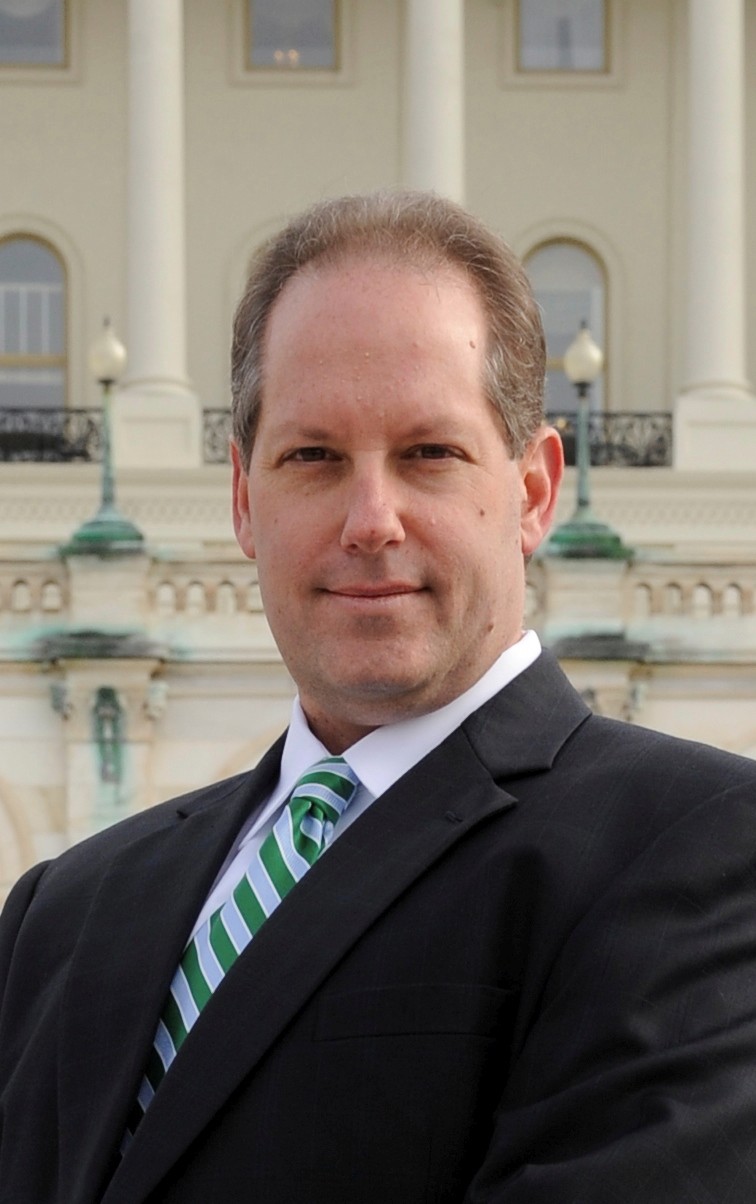
“TCGIF Spotlight” was created as our platform to recognize and provide exposure to our friends, clients, colleagues and team members both professionally and personally with simple, fun, entertaining and thought-provoking questions.
"The most successful organizations in this business always understand the importance of their people."
Can you share with us some key insights into the seniors housing industry that you've gained over your extensive career?
Seniors housing is first and foremost a people-driven business and, without fail, the most successful organizations in this business always understand the importance of their people. Both their associates and their residents and families. That is really where it all starts and ends, you need to build a culture that really cares about people.
What are some common misconceptions about seniors housing that you frequently encounter, and how do you address them?
I think many people fail to appreciate just how hard it is for a consumer to make the decision to move into seniors housing – despite the very real benefits of moving. We recently relaunched our Where You Live Matters (www.whereyoulivematters,org) consumer website and, among other things we hope to accomplish, we’re trying to use real resident/family videos from those who have made the move to try and help people who could clearly benefit from senior living, but are “stuck.”
As someone deeply involved in research, policy, and regulation in the seniors housing sector, what are some current trends or challenges you see shaping the industry's future?
On the policy side, the ASHA legislative team spends a lot of time on Capitol Hill with Members of Congress in both political parties talking about the significant pending impact of the aging baby boomers (born between 1946 and 1966). The U.S. will absolutely need to increase the pool of legal workers to care for this burgeoning population of older adults. It is crisis that can be addressed with Congressional action, but the politics are of course complicated on both sides of the political spectrum. There are other related policy implications that will also be front and center for policymakers in the years ahead and unfortunately my sense is our policymakers have seriously underestimated the impact of these demographic shifts.
Your involvement with various organizations, such as the Alzheimer’s Association Vision Gala Committee and the Granger Cobb Institute for Senior Living, highlights a commitment to improving the lives of seniors. Can you tell us about some impactful initiatives or projects you've been a part of?
Bill and Bob Thomas (founders of Senior Star, based in Tulsa) have been extremely involved in ASHA since the early 1990s and they have had an enormous impact on me and ASHA over the years. They got involved in the Alzheimer’s Association in the 1990s at both the local and national level and they helped facilitate our deep relationship with the Alzheimer's Association which includes advocacy, best practices, and raising funds to find a cure for this horrible disease. I have personally gotten very involved in the local Alzheimer’s Association (National Capital Area) with their Vision Gala (formerly called the Brain Ball). This event has raised over $11 million for the Alzheimer’s Association since its inception and has honored some of our industry’s finest ambassadors including Paul Klaassen, Mark Ordan, Debra Cafaro, Thomas DeRosa, Arnold Whitman, Larry Cohen, and Doris-Ellie Sullivan most recently. ASHA has also actively encouraged our members to form teams to participate in their local community Walks to End Alzheimer's and our members have been amazing. ASHA members formed over 11,000 teams last year and collectively raised $4.8 million for the Alzheimer's Association. Since we started keeping track in 2012, ASHA\ members have raised over $48 million with their community walks alone, which I am enormously proud of.
I have also been fortunate to have been involved in the creation of the Institute for Healthy Futures at Cornell University (which ASHA was a founding member of). I have also been involved with the Granger Cobb Institute for Senior Living at Washington State University which is a fabulous program housed within the Carson School of Business. It is a program that is helping educate next-generation leaders and I’m very proud of what the Institute is doing. Granger Cobb was an incredible man who touched the lives of thousands of people in this business during his lifetime, including mine. This program has dozens of engaged volunteers and leaders and the faculty and students and everything about this program is a perfect way to remember Granger’s important legacy.
How has the COVID-19 pandemic impacted the seniors housing industry, and what lessons have been learned from navigating this unprecedented challenge?
The COVID pandemic had a significant impact on seniors housing in ways that were both negative and positive. On the positive side, I think the industry came together collectively like never before and I am incredibly proud of what the industry did to take care of its residents and families in the best way possible under unknown and horrible circumstances. We successfully advocated for Provider Relief Funds for one of the only sectors that did not bill Medicare or Medicaid directly, and while the funds were not enough, they helped many companies survive.
The industry learned how to better use technology and I believe these applications have helped improve the resident/family experience and improve operating efficiency which is so important in the inflationary period that has followed the pandemic. I also think the pandemic has helped senior living position itself as a more visible and important player in the broader health care ecosystem.
With the aging population, what innovations or advancements do you foresee in seniors housing design and technology to meet evolving needs?
I do think the boomers who have the resources will continue to want larger apartments with plenty of storage, and good natural light. They will want their buildings to be eco-friendly/sustainably designed, have smart technology integration, community-centric spaces, walking paths, fitness rooms, etc. We have completed a couple of recent studies with ProMatura (Boomers and the Future of Senior Living and Active Adult Living: Understanding Today’s Consumer) that are based on robust samples and provide a very good road map of what the consumer is looking for in terms of housing, services and amenities.
What advice would you give to individuals considering a career in the seniors housing sector, given your wealth of experience in the field?
Understanding business (management, marketing, finance, and accounting) is very helpful to someone who wants to work in seniors housing. You can get this in a business program, hospitality program, and in some of the healthcare management programs. And, to the extent you can be exposed to senior living in an academic program, all the better especially if the school will help facilitate paid internships. I’m a big proponent of meaningful internship opportunities as a benefit to both students and future employers. I was fortunate enough to have meaningful internships at both the University of Connecticut as an undergraduate and at North Texas in graduate school.
As a Distinguished Alumnus of both the University of Connecticut and the University of North Texas, how have your educational experiences shaped your career trajectory and contributions to the seniors housing industry?
I have been honest about the fact that I was in the right place at the right time on several occasions. When I was at UConn as an undergraduate the school had a deep relationship with Traveler’s Insurance (Traveler’s Center on Aging) and I ended up being exposed to a number of aging courses and a career that I would not have otherwise known about. While at UConn, I also had opportunities to do internships at an excellent long-term care/rehabilitation facility and at a Section 202 senior housing community.
I was like a professional student coming out of UConn and went into what was then the best of the Masters Programs in long-term care in the U.S. at North Texas in Denton, TX. Here too, the school had an incredible faculty and network of alums across the country, many of whom provided amazing internships (which were part of the program requirements).
I ended up with an internship in Annapolis, MD at the National Association for Senior Living Industries (NASLI) which allowed me to meet people like Bill Kaplan, Bill Sheriff, Mary Leary, Tom Grape, Jim Stroud, Tony Mullen, Jim Moore, Chris Coates, Jim Eden, Jim Sherman, Susan Brecht, Margaret Wylde, and so many other incredible individuals. Thomas Fairchild was my advisor at North Texas, and I can never thank him enough for helping me get that internship at NASLI…
I’m a big proponent of meaningful internship opportunities as a benefit to both students and future employers. I was fortunate enough to have meaningful internships at both the University of Connecticut as an undergraduate and at North Texas in graduate school.
More News & Insights

TCGIF Spotlight Series
•
7/1/26
TCGIF Spotlight Series
•
6/12/26

TCGIF Spotlight Series
•
4/24/26