Hayley Eaves, Multifamily Specialist, Billingsley Company
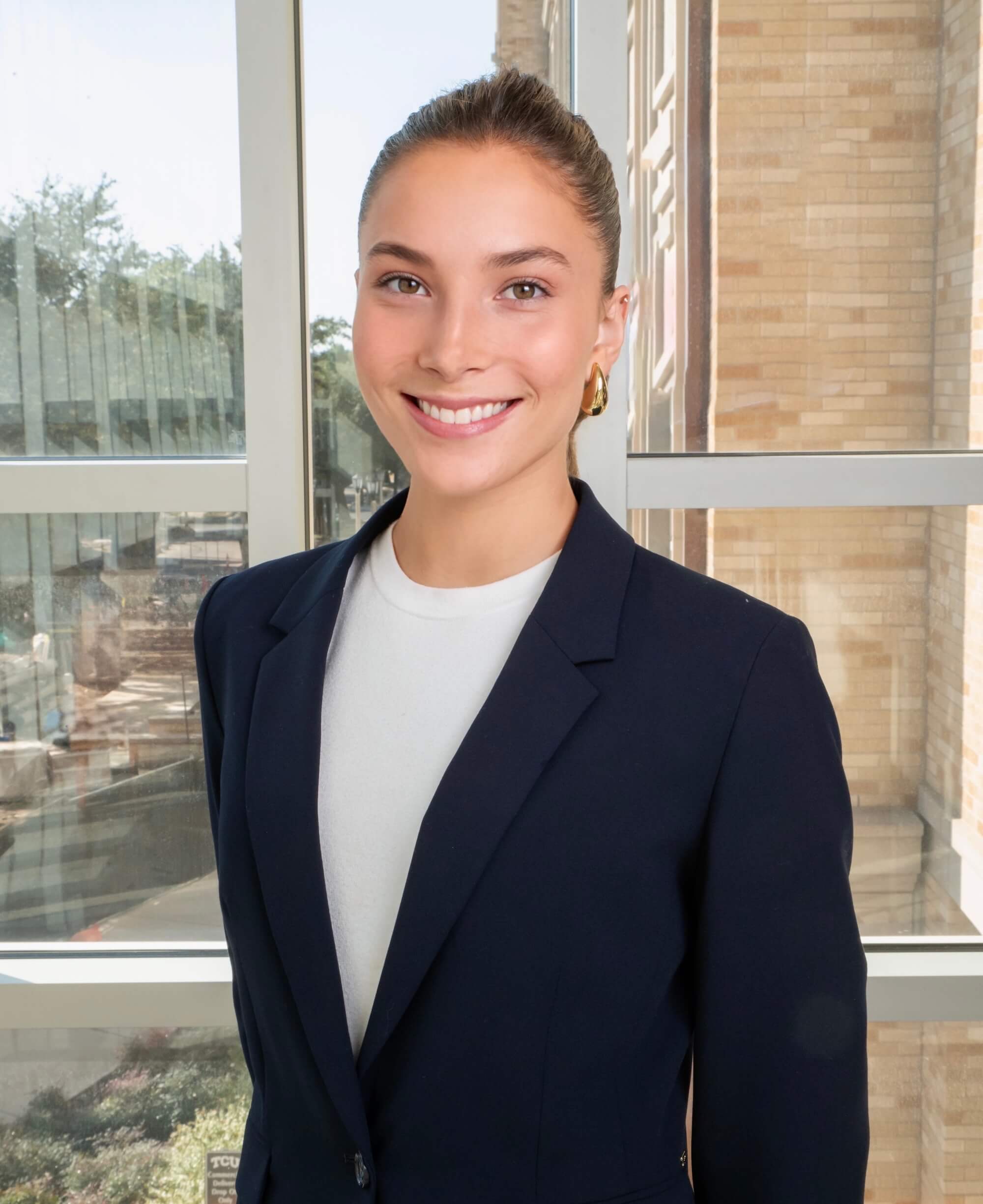
“TCGIF Spotlight” was created as our platform to recognize and provide exposure to our friends, clients, colleagues and team members both professionally and personally with simple, fun, entertaining and thought-provoking questions.
"Curiosity opens doors, fosters growth, and provides clarity - whereas judgment only limits opportunities and keeps you in a fixed mindset. By constantly asking ‘Why?’ and seeking to understand rather than assume, I’ve been able to expand my knowledge, think more creatively, and develop stronger problem-solving skills."
You’ve mentioned starting in Strategic Communications and later finding your path in real estate. What sparked your interest in this field, and how did your experiences at TCU shape that journey?
I had an internship in a fashion showroom with both well-known and smaller brands going into my sophomore year of college. My responsibilities included creating content for social media, particularly TikTok, setting up the showroom, and assisting with operations. As someone who’s always been creative - having styled my own clothes since I was three - I thought this would be my dream job. However, I quickly realized the role felt more like a side hustle, something I did late at night, rather than a career I was passionate about. It was difficult to admit, but it made me question my direction. I wasn't interested in public relations and didn’t want to pursue advertising either, which initially drew me to business in the first place: to break away from conventional practices. I started reflecting on why I disliked advertising, what that revealed about me, and how I could use that insight to shape my future. My conclusion was clear: I craved purpose, authenticity, and community.
Around the same time, my grandfather, a real estate developer for Trammell Crow, encouraged me to stay in Texas. He set up a meeting with Marc Myers, one of his former partners, at 7:00 am one Monday in Dallas. Within ten minutes, everything clicked. Watching individuals like my grandfather and Marc, both in their 70s, maintain strong relationships, health, wisdom, and vitality for over 40 years, I realized this was the kind of life I wanted. Real estate seemed like a tight-knit community of hardworking, charismatic, intelligent, and creative people, all with unique qualities. I found it incredibly fulfilling to help others build communities where they could make lasting memories, from raising children to saying goodbye to loved ones. Within three months, I went from knowing nothing about commercial real estate (CRE) to being the go-to person for real estate majors. That’s the power of networking and community.
How did you overcome self-doubt about entering a traditionally male-dominated field, and what advice would you give to others facing similar challenges?
In all honesty, it made it more appealing, and not for the reasons you’re probably thinking. I’m the only girl in my family, the only girl on my dad's side in over five generations, and my mom is a full-time lawyer specializing in white-collar crime, human trafficking, and fraud. I grew up playing all sorts of sports, including eight years of competitive club volleyball, where I went to the Junior Olympics three times and was the only freshman to start on my high school team - and I stayed there for all four years. Needless to say, I'm competitive by nature, and when faced with a challenge, I dive in headfirst.
Commercial real estate (CRE) is a unique field because it offers a variety of career paths and roles, depending on the company and location. I’ve spoken to leaders in the field who have vastly different career trajectories, which shows that there is no singular way to succeed. Initially, I was intimidated by the industry, assuming everyone was highly knowledgeable and well-versed in finance and accounting. That assumption led many people to turn away from this vast opportunity. The biggest piece of advice I received from real estate leaders was to focus on networking. Being a woman or not having the perfect resume doesn’t mean you can’t succeed - what matters most is making connections and talking to people. Real estate is an industry where everyone knows everyone and one connection leads to another. If someone isn’t willing to help you, it’s usually because they’re either threatened by your potential or too busy to engage. Don’t take it personally.
Above all, my biggest piece of advice is to truly understand who you are. When you have a deep awareness of your strengths, weaknesses, and values, you become more confident in any situation. This self-awareness not only builds your confidence but also enhances your ability to connect and communicate with others effectively. Knowing yourself is the foundation that empowers you to approach challenges with confidence and navigate conversations with ease.
What excites you most about your current role as a Multifamily Specialist, and how do you see yourself growing in this position?
As the Multifamily Office Specialist, I manage the corporate multifamily office, overseeing operations, finance, marketing, construction, HR, and development/design for our master-planned communities - totaling approximately 10,000 units. This expansive role has allowed me to gain hands-on experience across multiple functions, accelerating my learning and strategic thinking.
Having previously interned at Billingsley, I returned with a strong understanding of the company and established relationships with my colleagues. My transition into a full-time role coincided with a major office relocation, during which I played a key role in ensuring a smooth transition and everything was set up properly. Shortly after, we switched to a new HR system, and am currently involved in migrating to RealPage, our new CRM and CSS platform, to further strengthen our operational efficiency.
One of the most exciting aspects of my role is the exposure to both management and development - an opportunity not always available in similar positions. Billingsley’s commitment to internal growth has provided me with increased visibility and unexpected opportunities to contribute. Despite having recently graduated, I’ve found myself assisting in areas I hadn’t initially anticipated, from investment discussions to retail strategy and marketing initiatives. My ability to understand and engage in cross-industry conversations has proven invaluable, broadening my perspective and deepening my impact.
Being part of a company that balances creativity and development with operational excellence is incredibly rewarding. Seeing our master-planned communities take shape while collaborating with onsite teams to enhance resident experiences and uphold Billingsley’s high standards is what drives my passion for this role. I look forward to continuing to grow, take on new challenges, and further contribute to the company’s long-term success.
What were some of the most impactful projects or initiatives you worked on as the Social Media Coordinator for the TCU Center for Real Estate?
As the Social Media Coordinator for the TCU Center for Real Estate, I ran the Center’s and Club’s LinkedIn and Instagram page. The Club had an existing Instagram page that was not used. I brought back our Instagram and remained active and kept others engaged by posting events, event highlights, things happening in DFW, and more. One of the initiatives I started was the student and speaker spotlight series on Instagram and LinkedIn.
The most impactful part of this role was building relationships. My boss, whom I now consider my Texas mom, and I became close, and through that connection, I got the chance to take two real estate courses. The Center benefited as well, as I was able to engage with weekly industry professionals, sharing their insights and advice on LinkedIn. By actively posting and using LinkedIn’s power, I grew the page by over 200%. The role also helped me refine my business writing skills and allowed me to build lasting relationships with mentors and industry professionals who helped shape my understanding of the field.
You’ve highlighted the importance of connection and community. Can you share a moment when mentorship or collaboration significantly impacted your career?
One of the most impactful mentorship moments in my career was with Cary. During my senior year, I had the opportunity to introduce him in one of my real estate classes, where he spoke about golf and psychology - two topics that resonated with me, as my twin brother is a PGA Manager and I’ve always been fascinated by psychology.
After class, I spoke with Cary to learn more about his career path and interests. In our conversation, he mentioned a connection who had handled banking for one of Billingsley’s deals and offered to introduce me. Shortly after, I had taken a medical leave and initially felt hesitant about how that might be perceived, but Cary was nothing but understanding and supportive.
We reconnected in October at the TCU Center for Real Estate Advisors meeting, and a few weeks later, we met for lunch. It was refreshing to speak with someone outside of my company - someone deeply involved in real estate but also equally passionate about mentorship, community impact, and intellectual curiosity. Our conversation naturally led to discussions about how we could contribute to TCU’s goals, making it a truly full-circle moment.
You’ve been involved in projects exploring new technology for multifamily properties. How do you see technology reshaping the real estate industry, particularly in multifamily developments?
While commercial real estate as a whole has been slower to adopt emerging tech compared to other industries, there’s an undeniable momentum building. One of the most immediate impacts of technology is in construction and development. I anticipate that tools like drones and Firefly augmented reality (AR) glasses will significantly enhance efficiency, visibility, and safety on job sites. These innovations streamline project oversight, improve quality control, and reduce costly delays - making them invaluable assets in large-scale multifamily developments.
From a management perspective, smart home technology has already made strides and is slowly growing, but still significantly behind. One of the biggest challenges is the integration of AI into existing systems, as multifamily platforms often rely on multiple software solutions - sometimes upwards of 20 - that must communicate seamlessly. The potential for an AI-driven system that can analyze a company’s goals, adapt to pre-existing software, and optimize operations in real-time would be a game-changer. However, there seems to be an overarching fear and pushback on the use of technology and AI until it is more advanced and secure.
The current DOJ investigation into RealPage highlights how AI-driven algorithms are influencing rent prices across the industry. Companies like CBRE and JLL who use these platforms can price their units higher and have a higher return largely affecting competitors’ prices and the multifamily market. RealPage's system allegedly adjusted rental rates based on market demand and competitor pricing, leading to substantial increases in rent. If found to have manipulated pricing unfairly, this case could significantly impact the adoption of AI-driven pricing tools in multifamily. I think ethical considerations and regulations will largely shape how quickly and extensively these technologies are embraced.
Looking ahead, I wouldn’t be surprised to see tech giants like Elon Musk enter the multifamily space, introducing fully integrated AI-powered smart apartments that redefine the living experience. We may see the rise of self-optimizing buildings that not only adjust rent pricing but also predict maintenance needs, reduce energy consumption, and enhance security - creating a truly intelligent, data-driven living environment.
With increasing migration to Texas, especially from states like California, what trends or opportunities do you see emerging in the Texas multifamily market?
One of the biggest trends shaping the Texas multifamily market is environmental innovation. Developers are increasingly exploring sustainable building materials and energy-efficient designs to meet the growing demand for eco-conscious living. A great example is a fully wooden office building in North Dallas, developed by a friend of mine, Cody, the head of Office at Crow Holdings, which reduced carbon emissions by 90%.
On that note, another key shift is the evolution of amenities and communal spaces. Unlike states like California, which prolonged remote work trends or work from home, Texas largely kept its workforce in offices, prompting developers to rethink amenity offerings. The focus has been on creating unique, financially viable spaces that enhance the resident experience while making the best use of available land. I see a continued push toward bold, creative amenities - such as integrating boutique-style movie theaters into residential or office developments - to set properties apart in a competitive market.
This trend also underscores a broader movement toward simplicity and intentionality. Influenced by figures like RFK Jr. and his push for mindful living, people are becoming more discerning about where and how they invest their money. While architecture is embracing bold, dynamic creativity, interior design is shifting toward minimalism and functionality. Renters today prioritize timeless, adaptable spaces that offer longevity and practicality, ensuring their living environments remain relevant despite ever-evolving design trends.
City and local politics will continue to play a crucial role in shaping development. Especially in metro areas like DFW where Plano and Fort Worth, have vastly different approval processes, regulations, and consumer preferences.
You’ve shared lessons like embracing curiosity and letting go of control. Which of these lessons has been most transformative for you, and how have you applied it professionally?
Curiosity opens doors, fosters growth, and provides clarity - whereas judgment only limits opportunities and keeps you in a fixed mindset. By constantly asking “Why?” and seeking to understand rather than assume, I’ve been able to expand my knowledge, think more creatively, and develop stronger problem-solving skills. The more you question, the more you learn - and that mindset has been invaluable in my professional journey.
My boss shared with me the other day that she feels uncomfortable and threatened when I ask questions because she does not know how to respond, but that it has helped her become a better manager and leader. There is always room for growth and opportunity when you ask why versus turning the other way and making an assumption.
You’ve experienced long commutes and intense schedules. How do you maintain balance and motivation during demanding periods?
One of the biggest lessons I’ve learned is that drive and hunger can’t be taught - they come from within. From a young age, I’ve faced personal challenges that shaped my mindset, and I firmly believe that adversity either builds you or breaks you. It’s easy to get frustrated, blame circumstances, or dwell on setbacks, but that mindset never leads to real progress. Instead, I’ve channeled those experiences into resilience, using them to fuel my work ethic and personal growth.
It is a simple truth: I show up for myself. In today’s digital world - especially for my generation - it’s easy to get lost in comparison, constantly measuring our progress against curated snapshots of others’ lives. But I choose to focus on what I can control: my actions, mindset, and progress.
Having an athletic background taught me that success is just as much mental as it is physical. No matter how talented you are, performance ultimately comes down to mindset. Some days, I can work 16 hours straight and feel energized the next morning; other days, I need to take breaks to maintain productivity. The key is self-awareness - knowing how I operate, recognizing my limits, and adjusting accordingly. When you understand your strengths, weaknesses, and triggers, you gain the ability to push through anything. I also believe that rigid structure doesn’t always lead to success. While I’m highly organized, I’ve learned that setting overly detailed expectations for each day and then beating myself up if I don’t meet them is counterproductive. I reflect on my progress daily - looking back at where I was a week, a month, or even a year ago. That perspective keeps me motivated because it proves that I’m constantly evolving and capable of more. Most importantly, connecting with people fuels my passion. Whether it’s putting a smile on someone’s face or spending two hours helping a colleague, even on my busiest days, I know I’ve gained something valuable in return. At the end of the day, everything comes down to mindset. The moment you stop showing up for yourself, you lose momentum. But when you commit to continuous growth - embracing both the wins and the setbacks - you’ll always find a way through.
Can you tell us a bit about this project, what role you played, and how you see developments like this shaping community going forward?
The Courts was a particularly special project for me, as it was my first amenity development experience. I was involved from the initial stages, sitting in on calls with Lucy and the project leads to discuss her vision, identify key challenges, and determine areas where additional research was needed. My role included gathering data on third-party management vs. in-house operations, cost analysis, marketing strategies, and event planning.
One of the biggest challenges in developing The Courts was the land composition in Cypress Waters. The soil has a high concentration of montmorillonite, which leads to nearly 10x higher water retention and a greater tendency for expansion. As a result, we had to take extra precautions during land preparation to prevent foundation shifting. Additionally, because this area is relatively new, its power infrastructure is unique, making the electrical setup for The Courts especially complex.
When I completed my internship, I stayed in close contact with a superintendent I had worked with, who later took over as project manager and kept me updated on the progress. By the time I returned, the pickleball courts were nearly complete. Within my first 60 days back, I successfully organized two Billingsley Collection resident events.
Last summer, I had the opportunity to work on some exciting amenity ideas, including a Top Golf-like suite installed in one of the office buildings for the community to use. I’ve shared more ideas and am working on amenity research projects for the head developer for additions like a golf course, an equestrian center, and lifestyle-driven spaces such as an Erewhon store. As the demand for connection and community continues to grow, I believe we’ll see more innovative amenity spaces that foster resident engagement and elevate the living experience.
More News & Insights

TCGIF Spotlight Series
•
7/1/26
TCGIF Spotlight Series
•
6/12/26
TCGIF Spotlight Series
•
4/24/26